TSA Power Bank Rules: Watt-Hours from Milliamp-Hours
Power banks must be carried on and cannot be checked. Learn how to check battery capacity, calculate watt-hours and prepare your flight packing checklist.
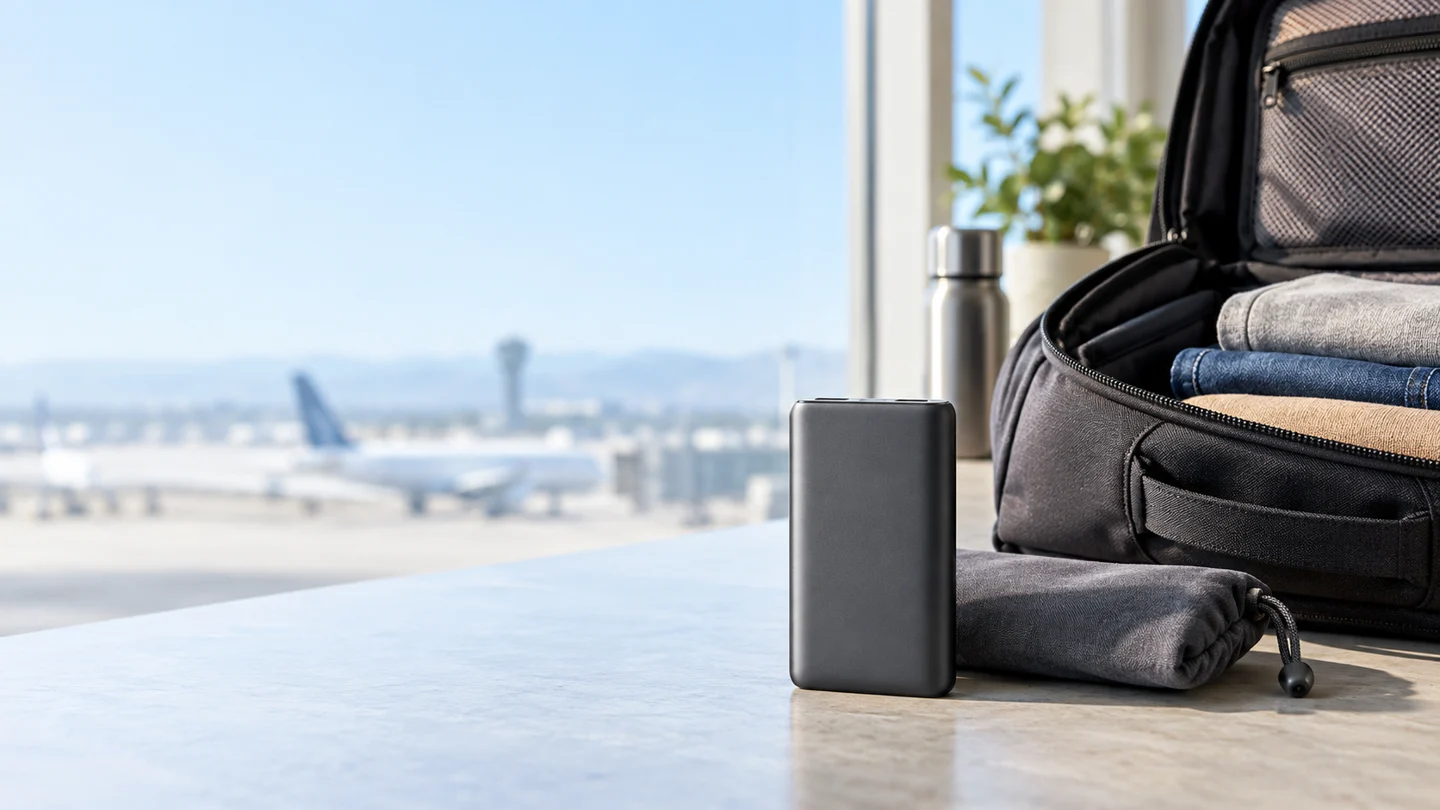
Power banks must be carried on and cannot be checked.
Checking TSA power bank rules for your trip? Use this US passenger guide for personal-use lithium-ion power banks.
Power banks must be carried on and cannot be checked. The baseline lithium-ion battery rating must not exceed 100 Wh. Airlines may have stricter quantity and Wh limits.
Use the calculation below, then work through the packing checklist. For the rest of your charging setup, explore our Charging & Power guides.
Check the flight limits
The baseline lithium-ion battery rating must not exceed 100 Wh. With operator approval, no more than two individually protected spare lithium-ion batteries exceeding 100 Wh but not exceeding 160 Wh may be carried per person in carry-on baggage. Power banks exceeding 160 Wh are forbidden.
What should I check for an airline approved power bank?
Check your air carrier’s specific restrictions before traveling. Airlines may have stricter quantity and Wh limits.
Convert the battery label to watt-hours
If the battery does not show Wh, determine its Wh rating. Use the battery’s nominal voltage and its capacity in ampere-hours to determine watt-hours.
To calculate Wh from mAh, divide mAh by 1000 and multiply by V.
(V × mAh) / 1000 = Wh
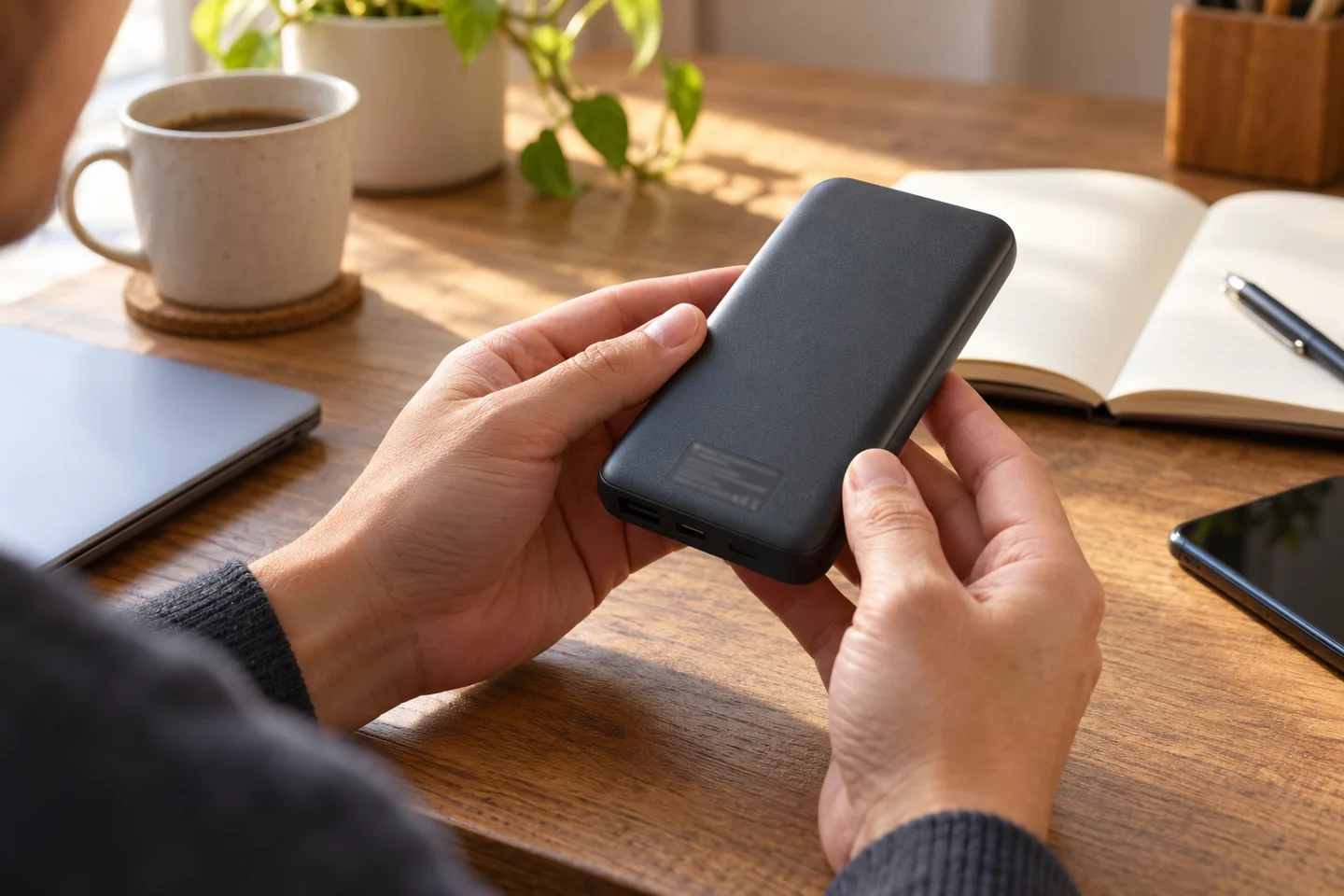
If the battery does not show Wh, determine its Wh rating.
Worked example: Xiaomi battery capacity
The Xiaomi example uses model PLM07ZM. Its battery capacity is 20000mAh. Its battery-capacity voltage is 3.7V. Its listed battery energy is 74Wh.
Its separate rated-capacity field is 12600mAh at 5V 5.4A. Its maximum output is 45W.
To determine watt-hours, use the battery’s nominal voltage (V) and its capacity in ampere-hours (Ah).
Protect the power bank when packing
Power banks must be protected from damage and short circuit. Battery terminals must not contact other metal. A snug plastic bag or protective pouch is a protection method.
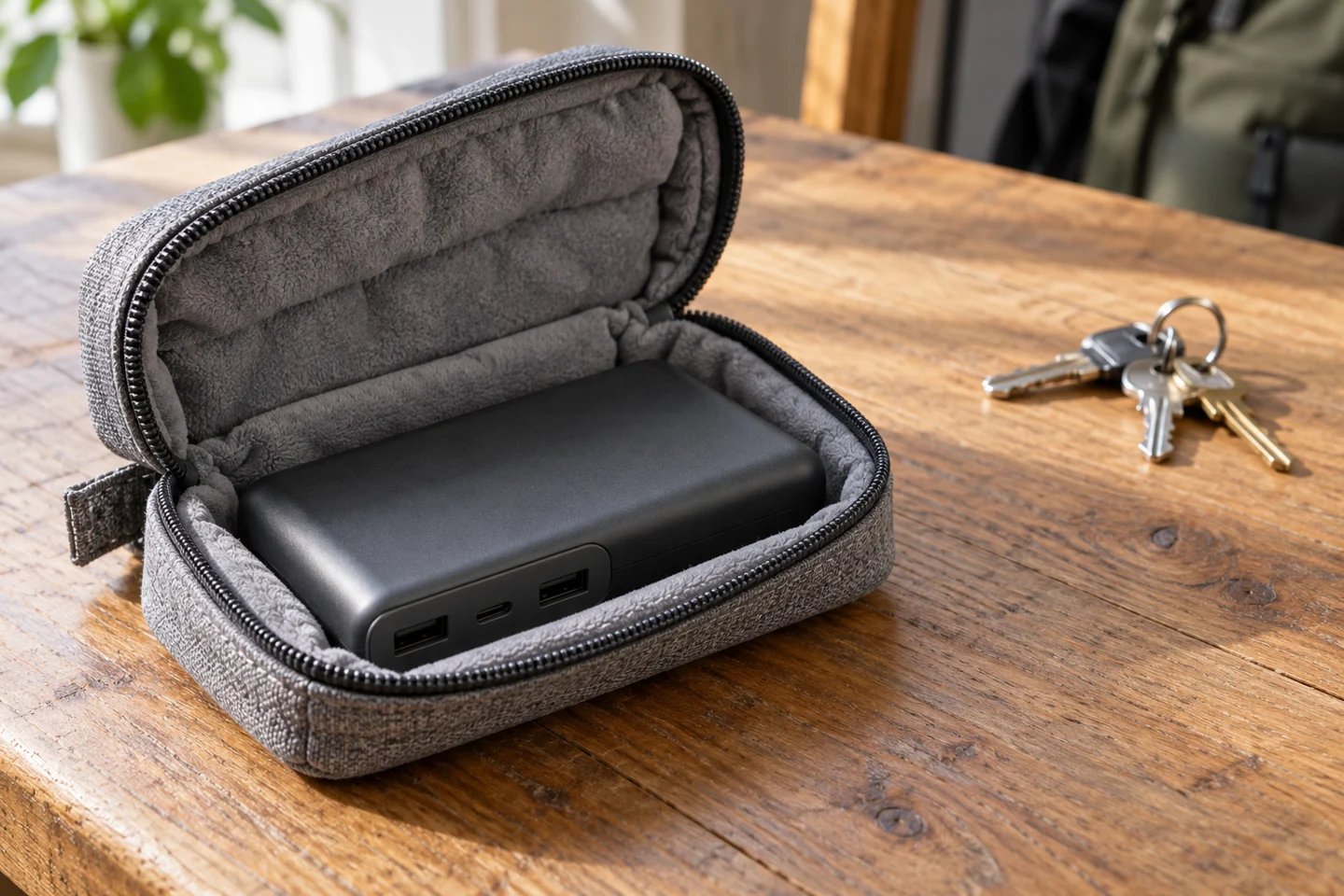
Battery terminals must not contact other metal.
Before handing over a bag at the gate
Remove power banks from a gate-checked bag and keep them with you in the aircraft cabin.
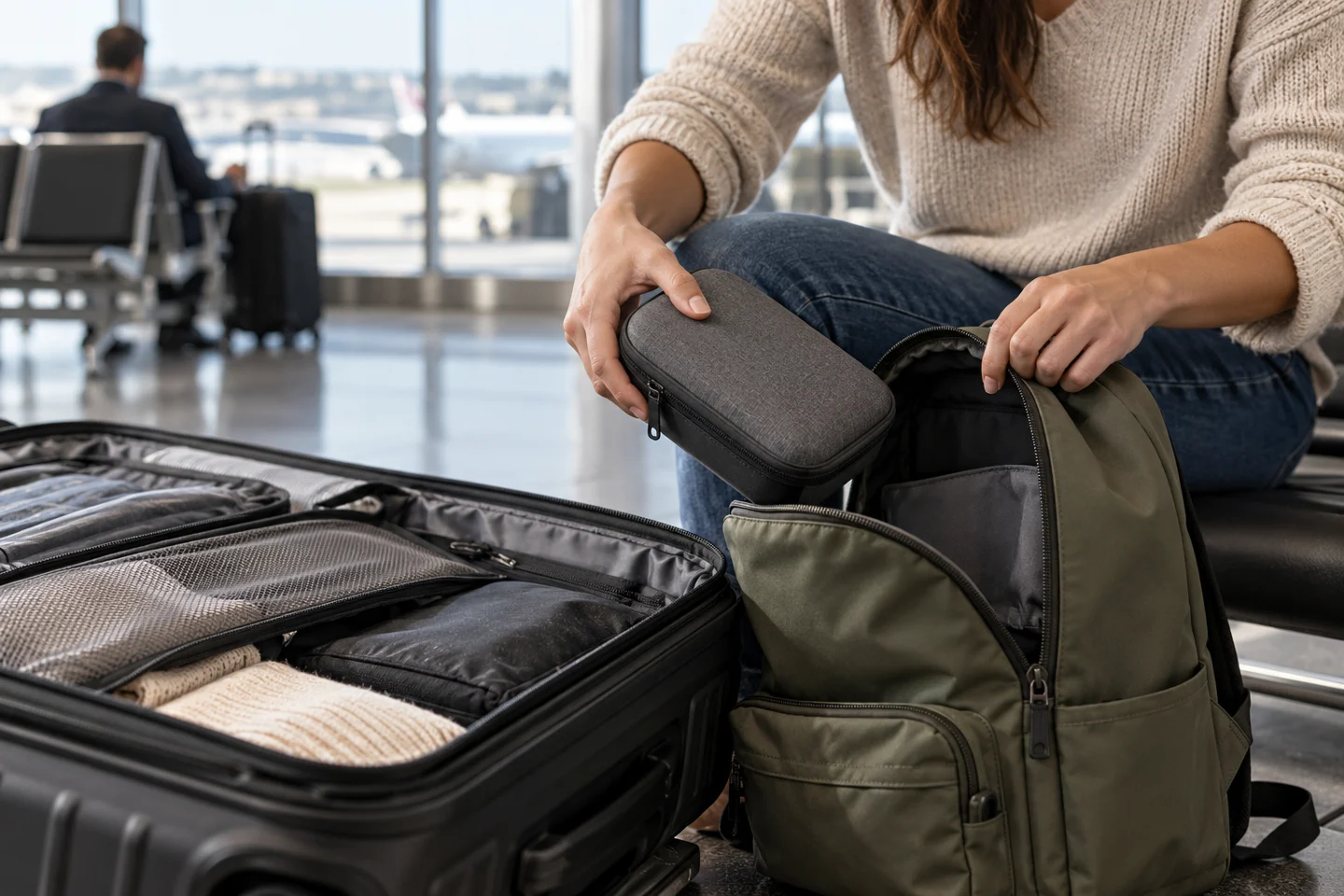
Power banks must be carried on and cannot be checked.
Your preflight checklist
-
If the battery does not show Wh, determine its Wh rating.
-
Check your air carrier’s specific restrictions before traveling.
-
Power banks must be protected from damage and short circuit.
-
Remove power banks from a gate-checked bag and keep them with you in the aircraft cabin.
-
Damaged or recalled batteries likely to spark or generate dangerous heat must not be carried aboard an aircraft unless the damaged or recalled battery has been removed or otherwise made safe.
Notify flight crew immediately if a lithium battery overheats, expands, smokes or burns.
Common packing questions
Can my power bank go in checked luggage?
Power banks must be carried on and cannot be checked. Remove power banks from a gate-checked bag and keep them with you in the aircraft cabin.
How many can I bring?
FAA guidance places no quantity limit on rechargeable batteries under 100 Wh for personal use. Airlines may have stricter quantity and Wh limits. Check your air carrier’s specific restrictions before traveling.
What if the watt-hour rating is missing?
If the battery does not show Wh, determine its Wh rating. To calculate Wh from mAh, divide mAh by 1000 and multiply by V. Use the battery’s nominal voltage and its capacity in ampere-hours to determine watt-hours.
Continue with our power bank buying guide for your next purchase.
Sources
- FAA — Airline Passengers and Batteries
- FAA — PackSafe Lithium Batteries
- eCFR — Exceptions for passengers, crewmembers, and air operators
- UK CAA — Pack right. Safe flight.
- UK CAA — Safety advice on what to pack
- Xiaomi — Mi Power Bank Pro specifications
Related articles
Do power banks go bad if not used?
Storage after disuse: Anker's 3-4 month recharge and 20-36 month drain window, with every unprinted percent, cycle life, and watt-hour left blank.
Read article
Camping Power Banks: Capacity, Weight and Solar
Size a camping power bank from measured USB energy, full-kit weight, and the sunlight a panel can collect. A 60W or 240W mark is a cable logo.
Read article
How to Choose a Power Bank: Complete Buyer Guide (2026)
Choose a portable power bank by charging mode, the port you will use, and watt-hours, including the FAA cabin limit.
Read article