How to Compare Phone Battery Life Before You Buy
Best smartphone battery life depends on stored energy, power draw and the test behind the hour. Record those before you trust a yearly list.
The short answer
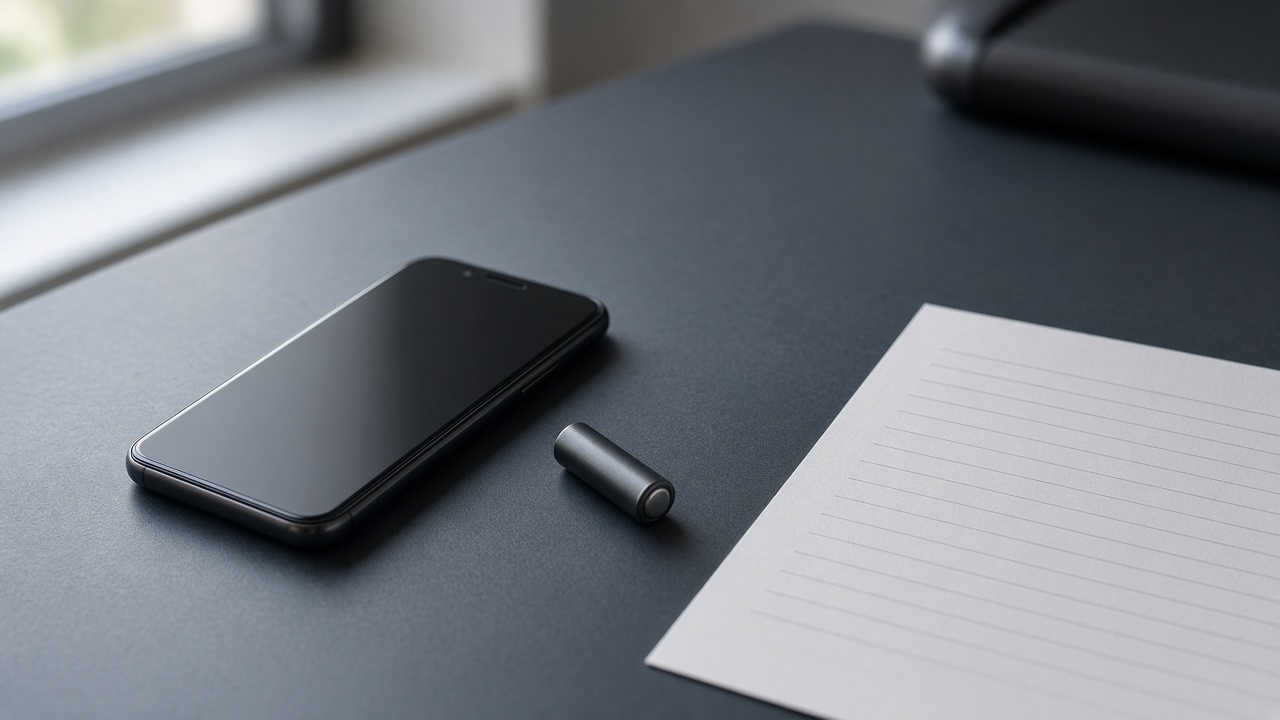
Best smartphone battery life is the result you can still explain after you write down stored energy, the power the phone draws, and the test behind any hour. A milliamp-hour figure is charge. Hours appear only after voltage and a real workload enter the comparison.
Scroll horizontally to see all columns.
| Field | What you copy from the source |
|---|---|
| Capacity and voltage | mAh, and nominal volts if the maker prints them |
| Stored energy | Watt-hours, or “voltage not stated” |
| Your main activity | Call, web, video, game, or a mixed day |
| Test conditions | Brightness, network, charge window, refresh, software build, date |
| Year on the query | Launch year, list year, or both, written separately |
Use one row per phone. A blank cell stays blank. A search for the longest battery life phone, a mobile with the best battery life, or the best smartphone battery uses this same sheet. Filling a cell from a different test, or from a forum hour that never names brightness, mixes results this page keeps apart.
Capacity states charge. Hours also need power.
Battery University describes the split directly. Power, in watts, is voltage multiplied by the current that flows when the circuit is closed. Energy, in watt-hours, is that power multiplied by time. An ampere-hour rating says how much current a pack can deliver over an hour. In their container picture, the amount of liquid is the energy and the speed you pour it is the power.
Treat voltage as constant only as a working step, and only at the nominal voltage printed for that cell. Then watt-hours equal volts times ampere-hours. Phone listings usually print milliamp-hours, and 1,000 mAh is 1 Ah, so:
Watt-hours = milliamp-hours × nominal volts / 1,000
The same article notes that load can collapse voltage, and that a fresh-cell energy snapshot misses aging and cold. Nominal volts are a label for the arithmetic, not a promise that the cell holds that voltage until empty.
A hypothetical listing of 2,000 mAh at a nominal 3.7 V stores 2,000 × 3.7 / 1,000 = 7.4 Wh. An assumed steady draw of 1 W would run 7.4 hours on that energy. An assumed steady draw of 2 W would run 3.7 hours. The charge never changed. The hour changed because the watt assumption changed. Neither watt figure is a measurement of a phone. Copy a voltage only when the spec sheet prints one, and leave the hour to a test that names the activity.
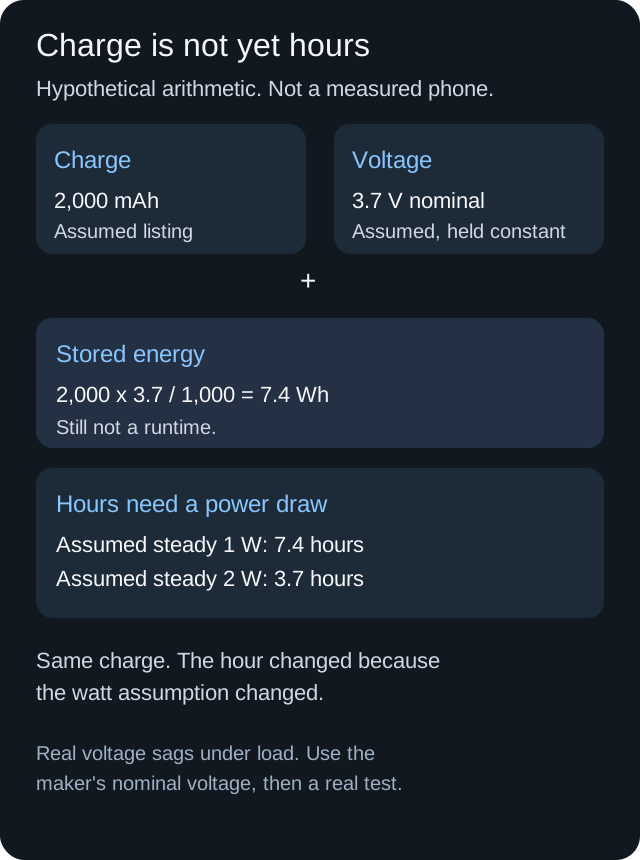
Same charge, two different hours, because the power assumption changed. Schematic only.
Takeaway: Write watt-hours when you have volts. Write the test’s power conditions before you write an hour.
Five factors decide the draw
Capacity is the tank. The chip, the screen, the network and the software decide how fast that tank empties for the day you actually have. A phone with a larger milliamp-hour number can still finish sooner if those four draw more watts.
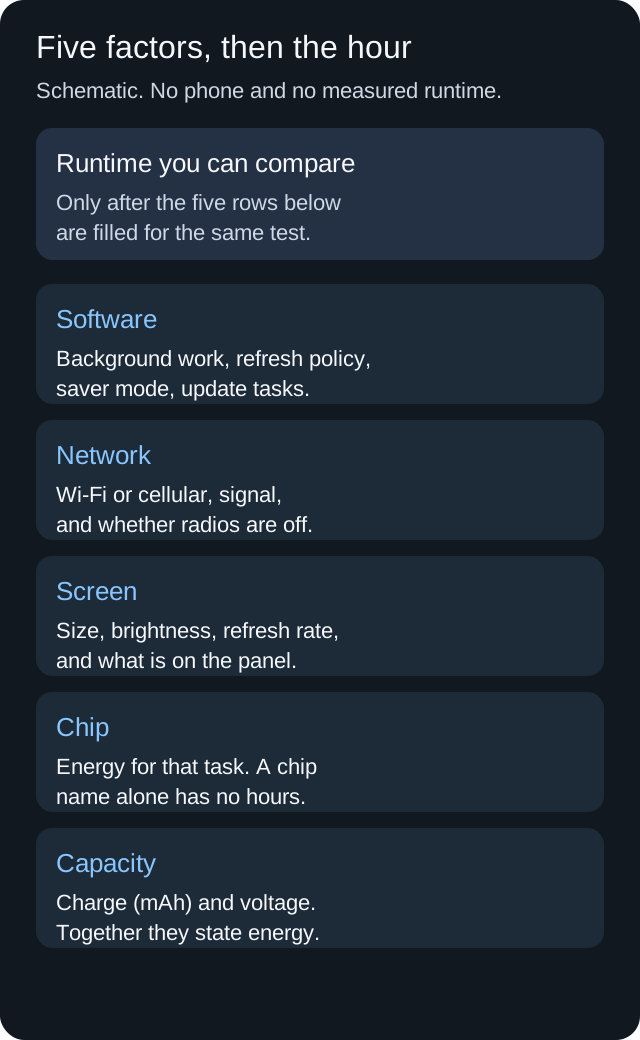
Read upward from capacity. The hour at the top is comparable only when every row uses the same test.
The chip’s energy use shows up inside a whole-phone test of a named activity. A processor name, a process-size slogan, or a “more efficient” line on a product page does not state watts. If two candidates use different chips, compare them on one protocol. Do not award the newer chip an hour you have not seen measured.
The screen is often the largest draw while it is on. Apple’s battery guidance says high brightness consumes a lot of energy, and it suggests turning auto-brightness on when that setting is off. Brightness, refresh rate and what is on the panel belong in the test note. How to judge size, readable text and refresh for your eyes is the separate job of the display guide. This page does not assign a percent saving to dark mode or to adaptive refresh.
The network changes the draw even when the screen looks the same. Apple says Wi-Fi uses less battery power than cellular networks, and that a low signal or a search for coverage affects battery life. Both Wi-Fi and cellular use less energy in a strong signal. On iPhone 12 and later, iPhone SE (3rd generation), and iPads with 5G, Apple’s 5G Auto setting switches to LTE when 5G speeds are not noticeably better, which Apple describes as saving battery life. A lab hour on Wi-Fi with airplane mode is a different radio condition from a day of weak cellular.
Software decides which of that work happens. Apple’s Low Power Mode reduces or disables Mail fetch, Hey Siri, Background App Refresh and some visual effects, and it turns off after a charge above 80 percent. Adaptive Power, on iOS 26 or later and only on the model list published on that same page, can turn Low Power Mode on at 20 percent. A review that never says whether those modes were on has left a field blank. After an iPhone software update, Apple says related tasks can keep running in the background and affect battery life for a while, so a test from the first day of a new build can include that temporary load.
Memory size is a different purchase question. The RAM guide covers it. A larger memory figure does not state a battery draw.
Read a manufacturer hour with its footnote
Samsung’s Canada Galaxy S25 specifications, checked on 12 October 2026, are a label-reading example. This site did not measure those phones. The page says the Galaxy S25 has a 4,000 mAh battery and that you can watch up to 29 hours of video, and that the S25+ has a 4,900 mAh battery and up to 30 hours of video.
Footnote 7 ties those hours to Samsung’s internal lab: a pre-release version of the model, Bluetooth earphones, default settings, LTE, and an estimate from battery capacity plus measured current during playback of a 720p file saved on the device. Samsung says actual times vary with network connection, settings, file format, screen brightness, battery condition and other factors.
Footnote 8 separates two capacity numbers. The typical value is an estimated average that considers variation among samples tested under the IEC 61960 standard. The rated capacities printed there are 3,885 mAh for the Galaxy S25, 4,755 mAh for the S25+, and 4,855 mAh for the S25 Ultra. The 4,000 mAh and 4,900 mAh figures in the answer are the typical values, not those rated values.
Read that pair as a method, then stop. The video hour is a local 720p file on LTE with earphones, estimated from current, on a pre-release build. It is a poor stand-in for web browsing, for a game, or for a Wi-Fi stream at a brightness you chose. On that page, the S25+ lists 900 mAh more typical capacity and one more video hour under the same footnote. Open the spec page for the country and model you would buy, and read that page’s footnote before you reuse either hour.
Read PhoneArena, GSMArena and CNET by their setup
These three publish phone runtimes. Their hours are theirs, under the setups below. This guide does not repeat their scores, their rank positions, or a winner. If you use one of their tables, paste the protocol name into your sheet and keep the hour attached to that protocol.
Scroll horizontally to see all columns.
| Lab and page | What they run | Conditions they publish |
|---|---|---|
| PhoneArena battery method, updated February 2026 | Scripted web browsing, one video playlist until the battery is depleted, a 3D game in easy mode | Same brightness on every phone, set with professional equipment. The nit value is not printed on that page. No apps that raise frequent notifications. Wi-Fi for all three tests. The Battery Score combines the three and is described as roughly real-world screen time. |
| GSMArena Battery Life Test 2.0, 8 November 2023 | Call, web, YouTube video, 3D game, combined into an Active Use Score | Screen-on tests: 200 nits on a white screen, location on, airplane mode, Bluetooth off, Wi-Fi on, volume at 15%, from 100% to 0%. Call test: 4G with VoLTE. Web: scroll and touch every 3 seconds, default refresh (they prefer variable). Gaming: locked to 60 Hz. |
| CNET phone testing, 14 March 2024 | 45-minute mixed use, a 3-hour YouTube playback, plus everyday use of the review phone | Stress test: brightness 50%, always-on display off, high refresh on if the phone has it, each task about 10 minutes, then the percent drained. Video: brightness 100%, auto brightness disabled, Wi-Fi, adaptive or high refresh if available, percent remaining at 1, 2 and 3 hours. |
PhoneArena’s April 2024 score announcement says they set that shared brightness to an exact level with a colorimeter. The February 2026 method page still does not print the nit number. When you cite a PhoneArena hour, write “same measured brightness, nits not stated on the method page” unless the review itself prints a nit value. Do not borrow 200 nits from GSMArena to fill the gap.
GSMArena’s Active Use Score is an estimate for a mix of the four activities with a slight emphasis on web and video, and it counts active use only. Standby is outside it. They say the older Endurance rating, which mixed an hour of calls, browsing and offline video with the rest of the day on standby, is not comparable, even though both results use hours. Their gaming test stays at 60 Hz so phones with and without high-refresh games share a setup. They also say high-refresh gaming is especially taxing and can shorten runtime in that test by up to 50%. That 50% is their warning about leaving their 60 Hz setup, not a result from this site. They add that your own attempt at the same activities can differ because of network, background processes, temperature and ambient light.
CNET’s 100% brightness is a slider position, not a nit target. Two phones at “100%” can be at different luminance if their panels peak at different levels. Their 50% stress-test slider has the same limit. A CNET percent and a GSMArena 200-nit result answer different brightness questions. Everyday-use comments in a CNET review are the reviewer’s days, with whatever signal and apps those days included. Keep them in a separate column from the two timed tests.
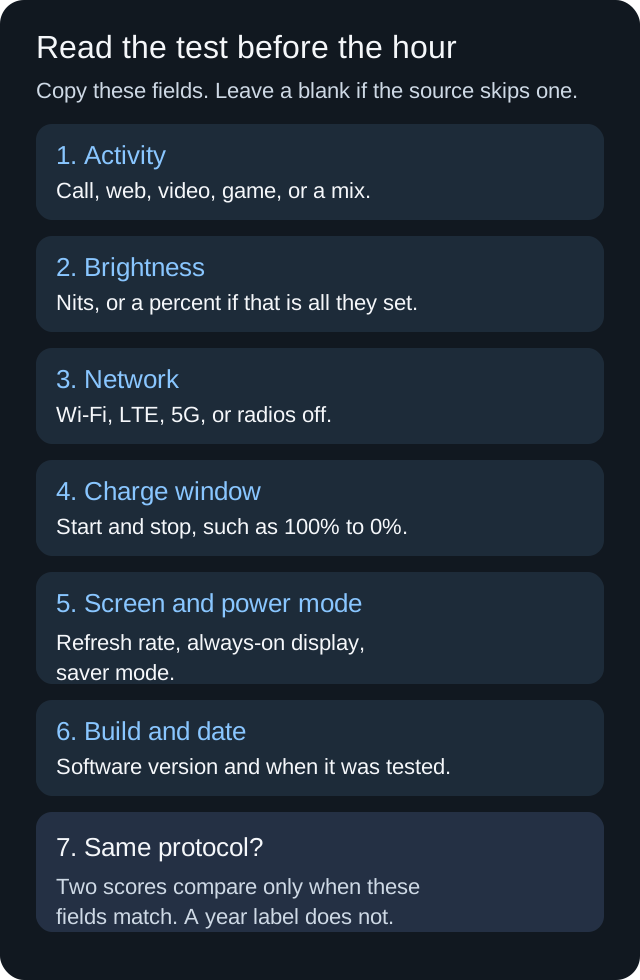
If a source skips a row, leave it blank. A year in the headline does not fill it.
A forum report can still help you choose which activity to look up. It mixes one person’s signal, brightness and apps. Copy the conditions when the post states them. Leave the hour off the sheet unless a controlled test repeats those conditions.
A lower price is a tradeoff, not a protocol
“Budget phone with best battery life” still needs the same sheet. Price does not name watt-hours, brightness, or the radio you will use. A lower price can come with a larger cell, a smaller or dimmer screen, an older modem, or a shorter update window. Those are separate lines. Check each one against the phone you would actually carry.
Ask what the money changes:
- Does the spec print typical capacity, rated capacity, and a nominal voltage, or only a milliamp-hour headline?
- Does the screen stay readable at the brightness you will use? Settle that in the display guide, then record the brightness the battery test used.
- Will this phone spend the day on Wi-Fi or on the cellular signal you have? Apple’s note on weak coverage applies to the place you stand, whatever the phone cost.
- Which published test matches your heaviest activity, and does that test say default settings or a saver mode?
A larger milliamp-hour number on a cheaper phone can still lose a web test to a smaller cell if the cheaper phone’s screen and radio draw more. The sheet shows that. It does not produce a budget winner. Battery health on a used phone, and whether a worn cell is worth replacing, is a later ownership question. Keep it off this new-phone comparison.
A year in the query is a label
Searches for best battery life phone 2025, best battery life phone 2026, and best smartphone battery life 2026 name a year. Write down which year you mean before you open a chart.
Scroll horizontally to see all columns.
| Year label | What to re-check |
|---|---|
| Phone launch year | Exact model and region, typical versus rated capacity, software build the test used |
| List publication year | Method page date, and whether the protocol name still matches |
| Both | You may be comparing a 2025 phone, still on sale, against a 2026 test that changed brightness or dropped standby |
GSMArena’s own split is the clearest protocol check. An Endurance hour from the older test includes standby. An Active Use hour does not. A 2026 article that quotes the new score is not an update of a 2025 article that quoted the old one. PhoneArena’s method page carries a February 2026 update line. Confirm the review you are reading uses that three-test Wi-Fi score, and confirm whether it prints a nit value. CNET’s March 2024 page uses percent brightness and a three-hour YouTube window. An older CNET review can predate parts of that write-up. The page itself says some methods were new enough that older reviews may omit them.
On a manufacturer page, re-read the footnote when the year changes. Samsung’s S25 example is a pre-release build, LTE, a local 720p file and a current measurement. A newer model page can keep that sentence shape and change the hour. The sentence is the part you compare.
Also re-check the phone the retailer is selling. Storage, region and carrier variants can differ from the unit in the test. If you might keep a 2025 model through a later year, remaining software support is its own clock. Use the software-support guide for that date. A long battery test on launch software does not extend the security endpoint.
Takeaway: Put the protocol name next to the year. If the protocol changed, you have two tests.
Write one row, then decide
For each phone still on the shortlist, keep this note. “Not stated” is a finished answer.
Scroll horizontally to see all columns.
| Field | Candidate |
|---|---|
| Exact model, region, storage | |
| Typical mAh / rated mAh / nominal V | |
| Watt-hours, if volts are printed | |
| Activity you care about | |
| Lab or maker, protocol name, date | |
| Brightness, network, refresh, saver mode | |
| Software build named in the test | |
| Source URL and the day you opened it |
Prefer the row whose test activity is closest to your day, with the fewest blank conditions. When two phones both cover that day, choose on the screen, the support window and the price. Extra hours from a test you will never repeat are a weaker reason than a complete note.
The Smartphone guides hold this comparison next to display, memory and software support. Charging speed, wireless charging and a power bank are different purchases. They do not fill a blank on this sheet.
Sources
Sources checked 12 October 2026. Lab hours and rank lists stay on the lab pages. The 2,000 mAh example is assumed arithmetic. Samsung’s hours and capacities are that Canada page’s claims, under the footnotes named above.
- Battery University, BU-503: power, energy and ampere-hours (page last updated 27 October 2021)
- Apple Support: if the battery drains too quickly (published 17 September 2026)
- Samsung Canada: Galaxy S25 specifications
- PhoneArena: how we measure battery life (last updated February 2026)
- PhoneArena: introducing the Battery Score (26 April 2024)
- GSMArena: Battery Life Test 2.0 (8 November 2023)
- CNET: how CNET tests phones (14 March 2024)
Related articles
How Much RAM Does a Smartphone Need in 2026?
Buying only more RAM can sacrifice storage or support budget. Compare an 8GB Android option with nearby configurations and your actual app-switching needs.
Read article
How to Choose a Phone Display: A Practical Buyer Checklist
Misreading peak brightness can waste money on an uncomfortable screen. Choose by readable text, everyday lighting and motion before panel labels.
Read article
How to Compare Phone Software Support Before You Buy
Buying old stock does not restart a launch-based support clock. Compare the exact model and region against your planned replacement date.
Read article